What You're Really Paying For When You Walk Into an Independent Tuning Shop
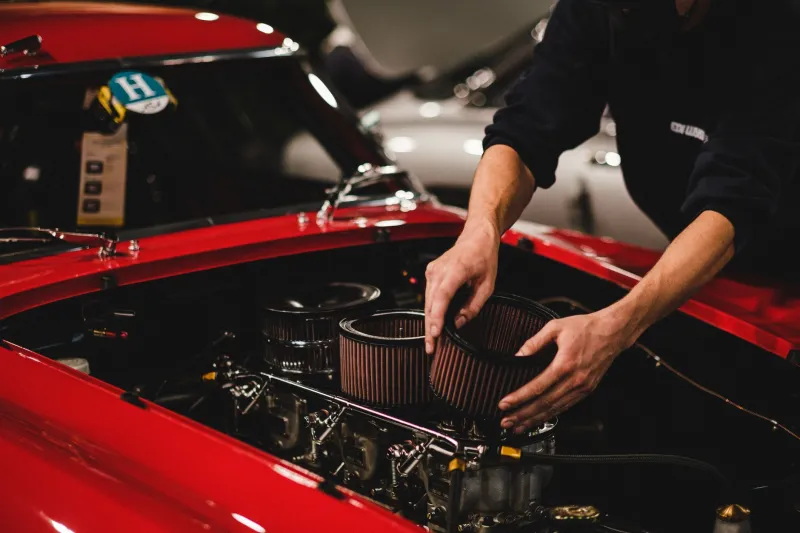
You've done the build. Intake, exhaust, maybe a set of cams or a bolt-on turbo kit. The car is running, but it's not right — and you know it. So you start calling around for a tune. The dealership quotes you something laughably basic. The chain shop down the street throws out a flat rate that sounds almost too cheap. Then the independent performance shop — the one with the dyno out back and the walls covered in customer build sheets — quotes you something that makes your eyes water.
So what gives? Why does one shop charge $500 and another charges $3,000 for what sounds like the same service?
The short answer: they're not the same service. Not even close.
The Equipment Behind the Price Tag
A legitimate performance tune starts with legitimate equipment, and that stuff isn't cheap to buy or maintain. A quality load-bearing chassis dyno — the kind that can simulate real-world driving loads instead of just spinning your wheels in the air — runs anywhere from $30,000 to over $100,000 depending on capacity and capability. Then you've got wideband O2 sensors, data logging systems, and platform-specific tuning software licenses that often cost thousands of dollars per year just to keep current.
When an independent shop quotes you a premium, part of what you're funding is access to that infrastructure. Every pull on the dyno, every data log session, every hour of monitoring fuel trims and knock events under load — that's the shop's investment working for your build. A shop running a cheaper handheld flash tool in a parking lot isn't offering the same product, even if the end result technically gets labeled a "tune."
The Expertise Premium Is Real
Here's something a lot of first-time build guys don't think about: the person touching your ECU calibration has probably spent years — sometimes decades — developing platform-specific knowledge that genuinely cannot be Googled. A tuner who specializes in, say, boosted LS applications or high-compression naturally aspirated Hondas has accumulated a mental database of failure modes, fuel system quirks, and timing sensitivity that makes them genuinely dangerous with a laptop in the best possible way.
That expertise isn't free. Good tuners are in demand. The best independent shops in major metro areas — places like LA, Houston, Atlanta, Miami — often have booking windows that stretch months out. You're not just paying for the hours they spend on your car. You're paying for the years they spent learning how not to blow up cars like yours.
A $500 mail-order tune based on a generic base map doesn't carry that institutional knowledge. It carries someone else's best guess applied to your specific combination of mods, fuel quality, altitude, and ambient temperature. Sometimes that works fine. Sometimes it grenades a motor.
Liability Changes the Math Entirely
This one catches a lot of enthusiasts off guard. When a reputable independent shop puts their name on a tune, they're also putting their reputation — and sometimes their legal liability — on the line. If a calibration causes a lean condition that destroys your pistons, a shop that stands behind their work is going to have to answer for that. The good ones carry insurance specifically for this scenario.
That liability exposure gets priced into the service. It has to be. A tuner who charges rock-bottom rates and disappears when something goes sideways isn't actually cheaper — they're just deferring your costs until something breaks. Meanwhile, an established shop with a track record and a warranty policy on their work is offering you something that has genuine financial value: accountability.
For a daily driver or a street car you're actually putting miles on, that accountability is worth a lot more than it sounds.
When the Big-Box Garage Makes Sense
Look, not every tune needs to be a custom calibration built from scratch on a dyno. If you're running a mildly modified daily — maybe a cold air intake, a cat-back exhaust, and nothing touching fueling or boost — a reputable off-the-shelf tune from a trusted platform-specific vendor might be totally appropriate. Some of the big-name tuning companies that sell pre-mapped calibrations for popular platforms do solid work for exactly this use case.
Chain garages and dealerships also make sense for anything that's still under warranty or for vehicles that are essentially stock. If you're not pushing the limits of your powertrain, you don't necessarily need someone with a dyno and a decade of platform experience. Basic diagnostic work and maintenance don't require specialty expertise.
The mistake happens when enthusiasts try to apply chain-shop economics to a build that has genuinely outgrown them.
The $500 Tune vs. the $3,000 Custom Calibration
Breaking it down honestly, here's what the price difference usually reflects:
A $500 tune is often a pre-built map flashed to your ECU with minimal data logging. It might be done remotely without the tuner ever seeing your car. It works off averages and assumes your build matches a known configuration closely enough for the map to be safe. For mild, well-documented builds on popular platforms, it can be fine.
A $3,000 custom calibration involves actual time on a dyno, iterative adjustments based on your specific car's behavior, multiple pulls to verify consistency, and a tuner actively watching your air-fuel ratios, knock counts, and boost curves in real time. The calibration is built for your car, not borrowed from someone else's. It accounts for your fuel, your elevation, your specific combination of parts.
The delta in cost reflects the delta in process. One is a product. The other is a service.
How to Know When You're Actually Overpaying
Not every shop charging premium rates is delivering premium results. The tuner tax can absolutely be real — some shops in high-demand markets charge for their name more than their work. Here's how to filter:
- Ask for dyno sheets from comparable builds. A shop doing good work can show you receipts.
- Check forum reputation. Platform-specific communities (LS1Tech, S197 forums, MotoIQ, etc.) are ruthless about separating legitimate shops from hype.
- Ask what software they use and why. A tuner who can explain their toolchain and methodology is a tuner who actually knows what they're doing.
- Get references. Talk to people who've had their cars tuned there. Find out how the car runs six months later, not just on dyno day.
A premium price at a shop with a strong community reputation and documented results is an investment. A premium price at a shop that's heavy on Instagram followers and light on verifiable customer outcomes is just expensive.
The Bottom Line
The independent tuning shop premium exists for real reasons — equipment costs, earned expertise, liability coverage, and the time it takes to do the job right. When your build has moved past bolt-ons and into territory where a miscalibrated map can genuinely hurt your engine, those reasons matter a lot. The tuner tax isn't a scam. It's the price of having someone who actually knows what they're doing hold the keys to your ECU. The trick is making sure the shop you're paying that premium to has actually earned it.