Paying the Price for Power: How Modified Car Insurance Works and What You Can Do About It
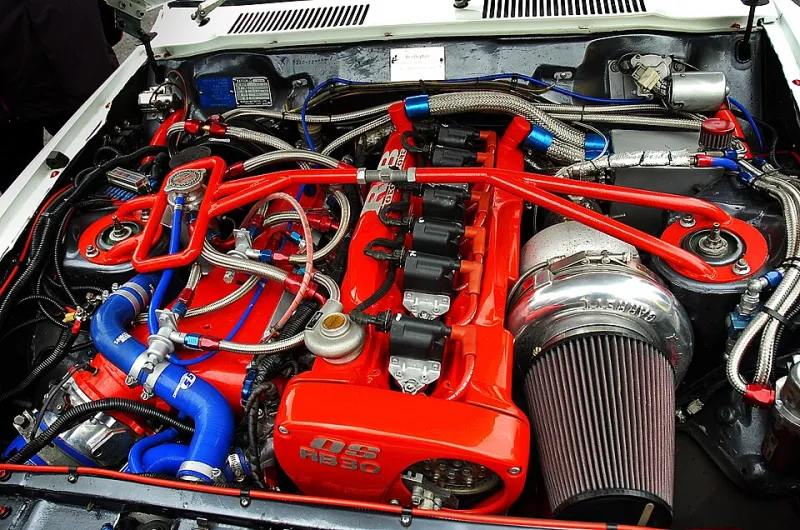
Photo: Collard, Attribution, via Wikimedia Commons
You spent months planning the build. You sourced the parts, found a reputable shop, and finally got that turbo kit dialed in. Then the insurance renewal lands in your inbox and suddenly you're staring at a number that looks less like a monthly premium and more like a car payment. Welcome to what the community half-jokes about as the "modification penalty" — the quiet financial consequence that a lot of first-time builders never see coming.
The truth is, insurance companies aren't just being difficult. They're running numbers, assessing risk, and using frameworks that were largely designed around factory-spec vehicles. When you start swapping parts, you're stepping outside the box their actuaries built — and that uncertainty costs you.
Why Underwriters Lose Sleep Over Modified Cars
Insurance pricing is fundamentally about predictability. Carriers have decades of crash data, repair cost history, and theft statistics on stock vehicles. The moment you bolt on a turbocharger, lower the suspension, or swap to aftermarket brakes, that historical data becomes less reliable. They can't easily predict what your car will cost to repair, how it'll perform in an accident, or whether modified parts will even be covered under a standard claim.
According to brokers who specialize in modified vehicle coverage, the underwriting process essentially starts over once significant modifications are disclosed. "We're not just pricing the car anymore," explained one specialty broker based out of Southern California who works primarily with street and track builds. "We're pricing an unknown quantity. And the industry charges for unknowns."
The specific upgrades that tend to trigger the sharpest premium hikes include forced induction (turbos and superchargers), engine swaps, suspension lowering kits, and wide-body conversions. Each of these introduces variables that standard policies weren't written to cover — and in some cases, they can void your coverage entirely if you didn't disclose them upfront.
The Disclosure Problem Nobody Talks About
Here's where a lot of enthusiasts get burned: not telling your insurance company about your mods. It feels harmless. The car still looks like a car. But if you file a claim and the adjuster discovers undisclosed modifications — especially performance ones — your carrier has grounds to deny the claim or even cancel the policy.
That's not a hypothetical. It happens. A builder in Texas shared his experience on a popular forum after a fender-bender revealed his undisclosed intercooler setup and suspension drop during the repair estimate process. The claim was denied. He was on the hook for everything.
The lesson isn't to hide your mods better — it's to find an insurer who can actually work with them.
What Specialty Insurers Actually Offer
The good news is that the modified car insurance market has matured significantly over the last decade. Carriers like Hagerty, American Collectors Insurance, and Grundy have long covered classic and collector cars, but a growing number of specialty programs now specifically target street builds and performance vehicles.
These policies differ from standard auto insurance in a few important ways:
- Agreed value coverage: Instead of actual cash value (which depreciates), agreed value policies pay out a pre-negotiated amount if the car is totaled. This matters enormously when you've got $8,000 in aftermarket parts installed.
- Parts coverage: Some specialty policies will cover the cost of your aftermarket components, not just the OEM equivalents.
- Usage-based classification: Many specialty insurers understand that a modified car used primarily for weekend drives and shows carries different risk than a daily commuter.
The catch? These policies often require appraisals, documentation of your build, and sometimes mileage restrictions. They're not plug-and-play like standard coverage, but for serious builders, the protection is worth the extra legwork.
How to Actually Fight the Premium Hike
If you're already staring down a brutal renewal quote, here's a practical approach to getting to a better number.
Document everything. Build a folder — receipts, photos, shop invoices — that tells the complete story of your modifications. Specialty insurers want to understand what you've built. The more clearly you can present your build, the easier it is for them to price it accurately rather than conservatively.
Shop with brokers, not just direct carriers. Independent brokers who work specifically with performance and modified vehicles have relationships with underwriters that the average consumer doesn't. They know which carriers are modification-friendly and which ones will quietly exclude your parts in the fine print.
Join a club. This one surprises people, but membership in recognized car clubs or organizations can sometimes unlock group insurance programs with better terms for enthusiasts. Several national marque clubs and regional car culture organizations have negotiated specialty coverage for their members.
Be honest about usage. If your modified car is a weekend warrior and not your 40-miles-a-day commuter, say so. Lower annual mileage and pleasure-use classification can significantly reduce your premium even within specialty programs.
Request a re-quote after an appraisal. A professional appraisal that establishes the actual value of your build — modifications included — gives an insurer a concrete number to work with. This often results in more accurate (and sometimes lower) premiums than a blanket risk-based estimate.
The Gap Between Builder Expectations and Underwriter Reality
One of the most common frustrations in the enthusiast community is the feeling that insurers simply don't understand car culture. And honestly? That frustration is valid. A lot of standard carriers genuinely don't have frameworks for evaluating a well-built, well-maintained modified street car versus a recklessly modified one.
But the specialty market is closing that gap. There are underwriters out there who actually get it — who understand that a meticulous builder with documented mods and a clean driving record is a better risk than a stock car owned by someone with three fender-benders on their record.
Finding those underwriters takes effort, but it's absolutely doable. The worst thing you can do is assume your existing carrier has you covered, or worse, that keeping quiet about your build protects you. It doesn't. What protects you is the right policy, built around the reality of your car.
Your build deserves coverage that actually covers it. Do the homework, find the right broker, and stop letting the turbo tax be the most expensive part of your setup.