Slammed and Broke: The True Cost of Chasing the Perfect Drop
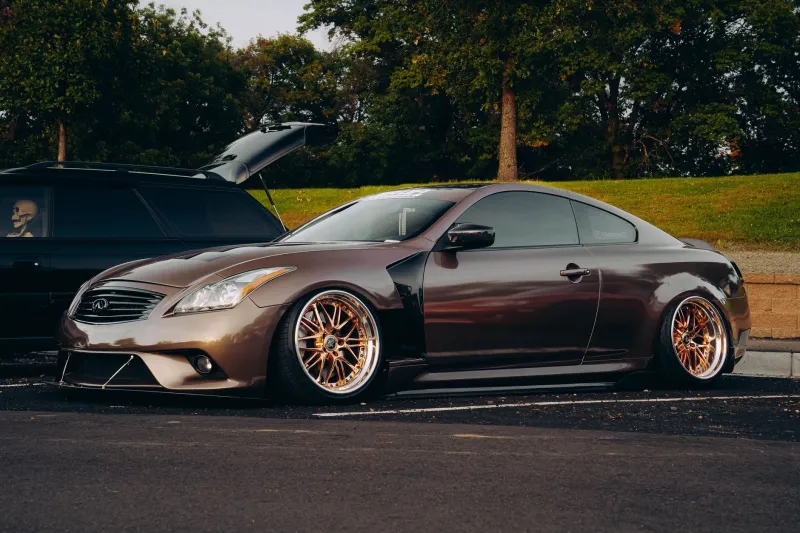
Scroll through any car enthusiast's Instagram feed on a Saturday morning and you'll see it everywhere — perfectly slammed rides sitting flush on meaty wheels, tucked so tight they look like they grew out of the asphalt. The aesthetic is undeniable. The execution, though? That's where things get complicated. Because behind every flawless stance shot is a repair history that would make your mechanic wince and your bank account weep.
Air suspension has become the go-to solution for builders who want that aggressive drop without committing to a static setup. The appeal is obvious: you can air out at a show, then theoretically drive home at a reasonable ride height. But here's the thing — the gap between what air suspension promises and what it actually delivers on a daily-driven street car is wider than most people want to admit.
The Geometry Problem Nobody Talks About
Here's the fundamental issue with slamming any car beyond its intended suspension travel: geometry doesn't care how good your build looks. Camber, caster, toe — these aren't just alignment shop buzzwords. They're the mathematical relationships that keep your tires planted, your steering predictable, and your chassis behaving like a car instead of a shopping cart with a turbo.
When you drop a car aggressively — especially beyond what the stock suspension geometry was designed to accommodate — you're introducing camber gain that the engineers never accounted for. Negative camber in moderate amounts can actually improve cornering grip. But the extreme angles you see on stanced builds? That's purely visual. You're now running on the inner edges of your tires, and the contact patch your rubber is putting down is a fraction of what it should be.
The result isn't just weird tire wear. It's unpredictable handling, reduced braking performance, and a car that genuinely fights you in emergency situations. On a track day car that never sees public roads, you can engineer around some of this. On a street car that needs to dodge potholes and hit the brakes hard when some distracted driver cuts you off on the 405, it's a liability.
Air Suspension: The Hidden Maintenance Trap
Air management systems are genuinely impressive pieces of engineering when they're spec'd correctly and maintained obsessively. The problem is that most builders budget for the initial install and nothing else. A quality air suspension kit from a reputable brand can run anywhere from $1,500 to well over $5,000 depending on your platform and how serious you're going. That's before labor, before corner balancing, and before the alignment work you'll absolutely need.
But the ongoing costs are what really sting. Air lines crack. Fittings leak. Bags wear out, especially if you're airing down frequently or running over imperfect road surfaces — which, if you live anywhere outside of a freshly paved subdivision, is basically everywhere. Compressors burn out. Manifolds fail. And when your system goes down, you're not just dealing with an inconvenience. Depending on how your system fails, you could find yourself riding on a corner that's bottomed out, which creates an entirely new set of geometry and clearance problems.
Shop labor rates for diagnosing and repairing air suspension issues aren't cheap either. This isn't a plug-and-play fix. Technicians who actually know these systems are worth their hourly rate, and that rate reflects it.
The Alignment Bill That Never Ends
Talk to any shop that does performance alignments and they'll tell you the same thing: stanced cars come back constantly. Not because the alignment techs are doing bad work — but because the geometry corrections needed to make an aggressively dropped car even marginally street-functional are fighting against the physics of what you've built every single time you drive it.
Standard alignment specs assume your suspension is operating somewhere near its intended range of motion. When you're sitting three inches lower than the factory ever planned, you may need adjustable control arms, camber bolts, or aftermarket knuckles just to get the car into a range where alignment is even possible. Those parts add up. And even after you've thrown parts at the problem, you're still making compromises.
Some builders in major metro areas are dropping $500 to $800 per alignment visit on heavily modified platforms. Multiply that by two or three visits a year — because things shift, components settle, and you keep tweaking the setup — and you're looking at a serious recurring expense that rarely makes it into the original build budget.
Tire Wear: The Bill You See Coming and Still Ignore
If you're running significant negative camber, you already know what's happening to your tires. The inside shoulders are getting chewed through at a rate that would horrify anyone who didn't choose this life deliberately. On an aggressively stanced build, tire life that should realistically last 30,000 to 40,000 miles might be gone in under 10,000. On some of the more extreme setups, enthusiasts are replacing tires seasonally.
Now factor in that stanced builds often run stretched tires — a style choice that adds visual drama but further compromises the tire's structural integrity and load-bearing capacity. Stretched rubber on a wheel it wasn't designed to fit is operating outside of its design parameters. The sidewall flex characteristics change. Bead retention becomes a legitimate concern at speed. It looks great in photos. The physics don't care.
So Is It Ever Worth It?
Honest answer? For the right builder with the right goals, yeah, it can be. If you're building a dedicated show car that gets trailered to events and driven sparingly, air suspension gives you exactly what you need — the ability to present the car at its most dramatic and still move it under its own power when necessary. That's a legitimate use case.
But if you're expecting to daily drive an aggressively stanced air setup, commute on it, take it on road trips, or use it as a performance street machine — the math stops working in your favor pretty quickly. The visual payoff is real. The mechanical and financial penalties are equally real, and they compound over time in ways that catch a lot of builders off guard.
The stance scene is full of passionate, talented builders who make it work through sheer dedication and consistent maintenance. But it's also full of people who chased a look without understanding the commitment that look requires. Before you air out your build for that perfect shot, make sure you've actually budgeted for everything that comes after the shutter clicks.