Loud Pipes, Louder Opinions: What Your Exhaust Setup Reveals About Who You Are as a Builder
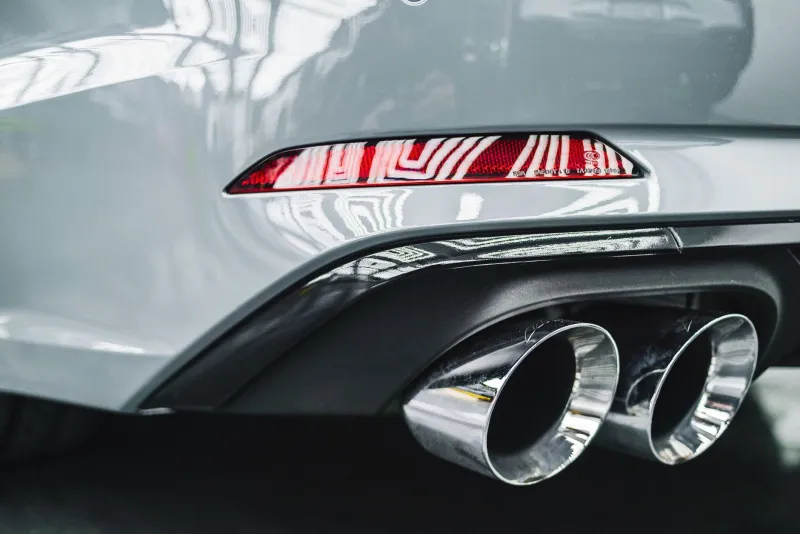
Walk any car meet from Pomona to Pittsburgh and you'll hear them before you see them. That deep, rolling burble of a built V8 idling through the parking lot. The crackle-and-pop of an aggressive tune on a turbocharged hatchback. The smooth, restrained growl of a sleeper that doesn't want to tip its hand. Every one of those sounds is a choice — and in the street car world, that choice means everything.
Exhaust systems have quietly become one of the most culturally loaded decisions a builder can make. On the surface, it's just pipes and mufflers. But dig a little deeper and you'll find a genuine philosophical war playing out in garages, forums, and city council meetings across America.
It's Not Just About Sound — It's About Identity
Ask ten builders what they want out of an exhaust and you'll get ten completely different answers. Some are chasing peak flow numbers, obsessing over diameter, header design, and back-pressure dynamics. Others are tuning for a specific sound profile the same way a musician tunes an instrument. And then there's a growing crowd that's going the other direction entirely — keeping things quiet, clean, and compliant.
"Your exhaust tells me more about your build philosophy than almost anything else," says Marcus, a fabricator out of the Dallas-Fort Worth area who's been building custom exhaust systems for over fifteen years. "Guys who run straight pipes don't care what you think. Guys who run resonated setups with a nice muffler — they want performance and they want to be able to drive the car every day without getting pulled over. Those are two completely different mindsets."
He's not wrong. The spectrum runs from full-on race-spec setups that would get you ticketed before you hit the end of the block, all the way to OEM-replacement exhausts that barely register above ambient highway noise. Where a builder lands on that spectrum is rarely accidental.
The Legal Tightrope Most Builders Ignore
Here's the uncomfortable reality: a huge percentage of street-driven modified exhausts are operating in a legal gray zone — or outright illegal territory. Most states have noise ordinances on the books, and California's 95 dB limit under the BAR referee system has become something of a national benchmark for how seriously authorities are starting to take exhaust enforcement.
In cities like Denver, Phoenix, and Chicago, residents near popular cruising corridors have pushed back hard, lobbying for stricter enforcement and even automated noise camera programs similar to what's been piloted in New York City. Those cameras can clock your decibel level and issue a ticket without a cop ever pulling you over.
"We've had multiple meetings with city council over the last two years," says a community liaison from a neighborhood near a well-known meet spot in the greater Atlanta area, who asked not to be named. "It's not that people hate car culture. It's the 2 a.m. drive-bys with straight-piped cars that wake up the whole block. That's what kills the goodwill."
For builders who want to keep the scene alive and accessible, that's a real problem. Noise complaints have shut down more than a few beloved local meets, and the PR damage to car culture in general is hard to quantify.
The Tone Chasers vs. The Flow Guys
Inside the enthusiast community, there's a fault line between people who prioritize sound and people who prioritize performance — though the best setups deliver both.
The "tone chasers" are building around acoustics. They're spending hours on forums listening to sound clips, debating the difference between a Borla ATAK and an S-Type, obsessing over whether a Corsa Sport gives them the right note at idle versus wide-open throttle. For these builders, the exhaust is part of the car's personality, as important to the overall experience as the suspension tune or the interior.
The "flow guys" see it differently. For them, it's a math problem. Headers, collector design, pipe diameter, muffler restriction — it all feeds into a power equation. Sound is a byproduct, not a goal. These are the builders who run systems that might not sound particularly dramatic at a stoplight but absolutely wake up at 6,000 RPM on a dyno pull.
"I don't care if it sounds mean in the parking lot," says Devon, who builds high-performance naturally aspirated Honda setups in the Pacific Northwest. "I care if it makes power where I need it. The sound is whatever the sound is."
Both camps have legitimate arguments. And both tend to look at the other with a certain amount of side-eye.
The Rise of the Quiet Builds
One of the more interesting shifts in recent years is the growing number of serious builders who are deliberately dialing things down acoustically. This isn't about giving up — it's about strategy.
Sleeper culture has always had a quiet-exhaust component (pun intended), but even builders who aren't hiding anything are gravitating toward more refined setups. Part of it is the daily-driver reality. A car that sounds like a NASCAR qualifying lap every time you cold-start it in your driveway at 7 a.m. is a car that eventually creates problems — with neighbors, with cops, with your own quality of life.
There's also a maturity angle. Builders who've been in the scene for a decade or more often talk about "growing out of" the need to announce themselves. The performance is still there. The ego just doesn't need the amplification anymore.
What the Exhaust Really Says
At the end of the day, your exhaust choice is a statement about what you value in a build and how you want to exist in the street car world. Loud and proud says you're not apologizing for what you built. Restrained and refined says you've got nothing to prove. Full race-spec says you don't particularly care about street legality, which is its own kind of commitment.
None of those positions is inherently wrong. But all of them have consequences — for your relationship with law enforcement, your neighbors, your local meet scene, and the broader community that's trying to keep car culture from getting regulated into the ground.
Choose your pipes carefully. Because in this hobby, how you sound is how you're heard — in more ways than one.