Delete at Your Own Risk: The Emissions Crackdown Street Builders Aren't Ready For
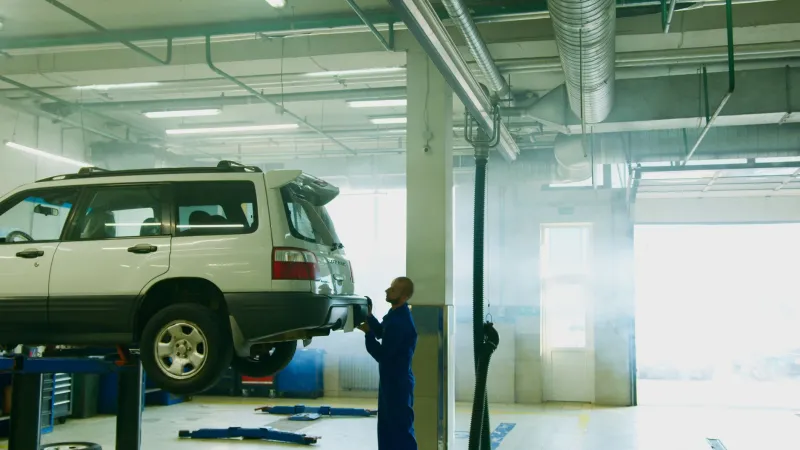
There's a ritual that plays out in shop bays across the country every single weekend. Guy pulls in with a turbocharged build, drops it on the lift, and the first conversation — before boost levels, before injectors, before anything else — is about what to do with the emissions equipment. Catalytic converter? Gone. EGR valve? Blocked off. DPF on that diesel? Deleted before the ink was dry on the title.
For a long time, that was just how the game was played. You pulled the smog gear, picked up a few extra ponies, and hoped for the best when inspection season rolled around. But that playbook is getting builders into serious trouble now, and a lot of them don't fully understand why — or how much worse it's about to get.
What These Systems Actually Do (And Why They're Harder to Fool Than You Think)
Let's be real: most enthusiasts treat emissions equipment like dead weight. And from a pure power-per-dollar standpoint, there's some logic there. Catalytic converters create backpressure. EGR systems recirculate exhaust gases in ways that can hurt combustion efficiency. Diesel particulate filters choke flow on high-output applications. Nobody's arguing those points.
What a lot of builders are getting wrong is how sophisticated the monitoring systems around that equipment have become. Modern OBD-II architecture doesn't just check whether a component is present — it actively runs continuous readiness monitors that evaluate system performance over time. Your ECU knows if your cat is functioning at the right conversion efficiency. It knows if your oxygen sensor readings are behaving the way they should downstream of the converter. It's not just looking for the hardware; it's looking for proof the hardware is working.
When you gut these systems and slap on a tune that tries to mask the missing components, you're essentially trying to convince a increasingly suspicious computer that everything is fine. Sometimes it works. Increasingly, it doesn't.
The Inspection Lane Is Getting Smarter
State inspection programs have quietly been upgrading their infrastructure over the past several years, and a lot of builders haven't noticed. The old days of a visual check and a basic tailpipe sniffer are fading fast in high-enforcement states. What's replacing them is a combination of OBD-II data pulls, remote sensing technology, and in some areas, roadside surveillance systems that can flag high-emitting vehicles without ever pulling them over.
California — no surprise — is the most aggressive. The California Air Resources Board (CARB) has been systematically closing loopholes that let modified vehicles slip through inspections, and their enforcement arm has gotten serious about referral programs that flag vehicles with tampered equipment. But California isn't alone. Colorado, Washington, and several northeastern states operating under similar emissions frameworks have all tightened up their testing protocols in recent years.
Texas, which runs one of the largest vehicle inspection programs in the country, uses OBD-II data pulls as a primary inspection method in most of its major metro counties. That means even if your visual presentation looks clean, the data coming off your ECU can blow the whole thing up. Incomplete readiness monitors — the kind that pop up after a fresh tune or an ECU reset — will fail an inspection outright in most of these states, regardless of what your exhaust actually smells like.
Real Consequences, Not Just a Sticker
Here's where it stops being theoretical. Builders who get caught with tampered emissions equipment aren't just looking at a failed inspection sticker. Depending on the state and the severity of the modification, the consequences can escalate fast.
In California, a vehicle with a CARB-illegal modification can be placed on a Planned Non-Operation status, meaning you legally can't drive it on public roads until it's brought into compliance. Repeat offenders or commercial operations that perform illegal emissions modifications face civil penalties that run into the tens of thousands of dollars. There have been cases — documented, public record cases — where vehicles have been impounded at smog stations when inspectors discovered significant tampering.
At the federal level, the EPA's enforcement of the Clean Air Act includes provisions that target both the individuals who modify vehicles and the shops that perform or sell defeat devices. The agency has gone after major aftermarket tuning companies in recent years, and while individual builders haven't been the primary targets historically, the regulatory framework to pursue them absolutely exists.
For diesel owners specifically, the DPF and DEF delete market has been under serious federal pressure. Several companies that sold delete kits or tuning software designed to circumvent diesel emissions controls have faced massive fines and injunctions. If you bought hardware from one of those companies, you're sitting on equipment that's difficult to service, increasingly hard to get support for, and legally problematic if you ever want to register the vehicle in a stricter state.
The Compliance Gap Nobody Talks About
Here's the frustrating part for performance enthusiasts: there genuinely is a gap between what's legal and what's fast, and pretending that gap doesn't exist doesn't help anyone. A full catless downpipe on a turbocharged build will outflow a high-flow catalytic converter. That's just physics. The question is whether the performance difference is worth the legal and financial exposure.
A growing number of tuners are starting to have that conversation honestly with their customers. High-flow cats have gotten significantly better in recent years — not perfect, but meaningfully improved. Some tuners are building calibrations specifically designed to work with intact emissions hardware while still extracting real performance gains from other areas of the tune. It's a more constrained approach, but it's one that keeps the car on the road and out of the inspection failure lane.
There's also a track-only angle worth considering for builders who want to go full send on the emissions delete strategy. A dedicated track car that never sees public roads sidesteps the inspection problem entirely. It's not cheap — maintaining two vehicles is a serious commitment — but it's the honest version of wanting uncorked performance without playing games with regulators.
Where This Is All Headed
The trajectory here isn't hard to read. Emissions enforcement is getting more automated, more data-driven, and more coordinated between state and federal agencies. Remote sensing technology — systems that can measure exhaust composition from vehicles passing at highway speeds — is already deployed in several states and expanding. The idea that a tastefully-tuned delete job will just blend into traffic is getting less realistic every year.
For street builders who want their cars to actually be street cars — registered, insured, and drivable without a constant low-grade anxiety about inspections — the math on emissions deletes is changing. The power gains are real, but so are the consequences. And the consequences are getting harder to dodge.
Know your state's rules. Know what your tune is actually doing to your readiness monitors. And maybe — just maybe — have a real conversation with your tuner about what compliant performance actually looks like in 2024, because that conversation is a lot cheaper than an impound fee.