Ghost Tunes: Inside the Secret Online Networks Where Street Builders Swap ECU Files and Break OEM Rules
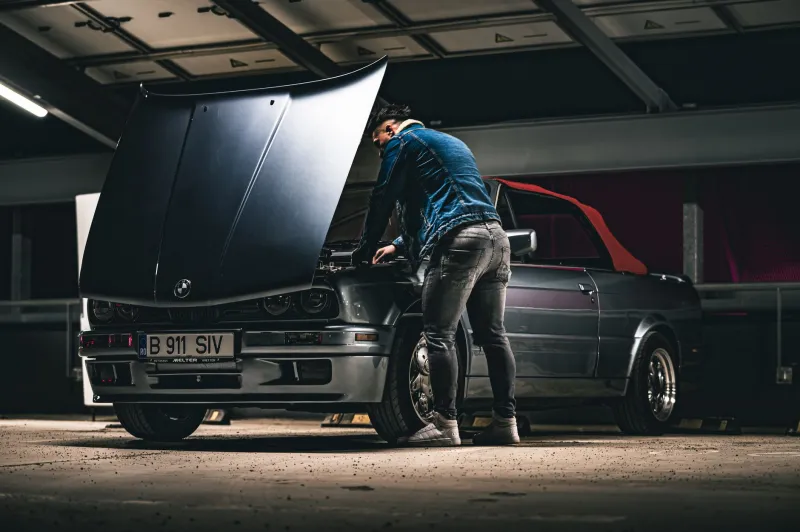
There's a version of the street car scene that happens entirely in the dark. No shop lifts, no dyno runs, no business cards. Just a username, an invite link, and a compressed folder full of calibration files that somebody swears will unlock another 60 horsepower on your platform. Welcome to the ghost tune underground — one of the most fascinating and genuinely risky corners of modern car culture.
It's been growing for years, quietly, underneath the Instagram builds and the big-name tuning shops. And right now, it's bigger than most people in the mainstream scene want to admit.
How It Actually Works
The infrastructure is surprisingly organized for something that operates entirely outside official channels. Most of it lives on Discord — private servers with tiered access, verification requirements, and channel structures that would look familiar to anyone who's spent time in gaming communities. You get in through a referral, prove you're not a manufacturer plant or a liability-hunting journalist, and suddenly you've got access to a library of ECU calibration files sorted by platform, year, and modification level.
Some servers go deeper. Encrypted file-sharing through apps like Signal or Telegram. Dedicated channels for specific platforms — one for GM trucks, one for late-model Mustangs, one for the import crowd chasing power out of turbo four-cylinders. Moderators who have been around long enough to have genuine reputations. A culture of reputation that works a lot like eBay feedback, except the stakes are considerably higher than a late package.
The files themselves range from basic off-the-shelf tunes repurposed for sharing to fully custom calibrations built by people who genuinely know what they're doing. The problem, of course, is knowing which is which before you flash it to your car.
The Cat-and-Mouse With Manufacturers
Automakers aren't blind to this. The escalating complexity of modern ECU architecture is, at least in part, a direct response to the tuning community's ability to crack and modify factory software. Every generation of security gets defeated. Every defeat triggers a new layer of protection. It's been playing out for over two decades, and neither side is winning clean.
GM, Ford, and Stellantis have all rolled out increasingly aggressive anti-tamper measures in recent model years. Some manufacturers have gone as far as implementing rolling cryptographic keys that make unauthorized flashing dramatically more difficult. The community's response has been to get more sophisticated — sharing decryption tools, pooling resources to reverse-engineer new security layers, and building relationships with overseas developers who operate in jurisdictions where these activities exist in a legal gray zone.
The import side has its own version of this arms race. Honda, Toyota, and Subaru have all tightened ECU security on newer platforms, pushing tuners who once had clean access to older-generation files toward workarounds that are increasingly complicated and increasingly risky.
Why Builders Are Going This Route
The honest answer is money, access, and frustration. A proper professional tune from a reputable shop on a modern platform can run anywhere from $800 to well over $2,000 depending on the car and the level of work involved. For a builder who's already stretched thin after buying hardware, that's a real barrier. A file from a Discord server costs nothing, or close to it.
There's also a geography problem that doesn't get talked about enough. If you're in a major metro area — LA, Dallas, Chicago, Atlanta — you've got options. But a huge portion of the American car scene lives in places where the nearest qualified tuner is a three-hour drive. The underground fills that gap whether the mainstream scene acknowledges it or not.
And then there's the control angle. A segment of the DIY community simply doesn't want to hand their car over to someone else's calibration. They want to understand what's happening inside the ECU, make their own adjustments, and own the result. For those builders, the underground isn't a budget compromise — it's a philosophical choice.
The Real Risks Nobody Warns You About
Here's where it gets uncomfortable. The same anonymity that makes these networks feel liberating is exactly what makes them dangerous. When you flash a tune from a username you've never met, you're trusting that the person who built that file knew what they were doing, calibrated it for your specific setup, and didn't make any of the dozens of errors that can turn a high-performance engine into scrap metal.
Bricked ECUs are the best-case bad outcome. They're expensive and annoying, but recoverable. Spun bearings, hydrolocked cylinders, detonation damage — those are the scenarios that end builds and sometimes end engines for good. And when something goes wrong with an anonymous tune, there's no recourse. No warranty. No shop to call back. No one to hold accountable.
The legal exposure is real too, and it's something a lot of builders don't fully think through. Flashing an ECU in a way that defeats emissions controls is a federal violation under the Clean Air Act, regardless of whether the car ever sees an inspection lane. If your modified vehicle is involved in an accident and investigators determine the ECU was tampered with, you're looking at liability complications that your insurance company is almost certainly not going to help you navigate.
Voided manufacturer warranties are essentially guaranteed the moment you flash unauthorized software, and increasingly, dealers have the diagnostic tools to detect that it happened even if you reflash back to stock before a service visit.
The Culture Behind the Code
Strip away the legal exposure and the mechanical risk, and what you've got is something genuinely interesting from a cultural standpoint. These communities have developed their own ethics, their own hierarchies, their own sense of craft. The builders who've been around long enough to have real credibility in these spaces are often legitimately skilled — people who could be working professionally but choose to operate outside the traditional structure for reasons that aren't always about money.
There's a DIY ethos here that connects directly back to the roots of American hot rod culture. The idea that you own your car, you own what's inside it, and no manufacturer gets to tell you what it can and can't do. That argument has been made in garages and at car shows for eighty years. The digital version is just playing out on a different battlefield.
Whether you think these networks are a legitimate expression of builder culture or a liability minefield dressed up as community is probably going to depend on how you feel about risk in general. But either way, they're not going anywhere. The underground has always been part of this scene. It just moved online, encrypted itself, and got a lot harder to ignore.