Locked Out: How Modern Engine Computers Are Winning the War Against Street Tuners
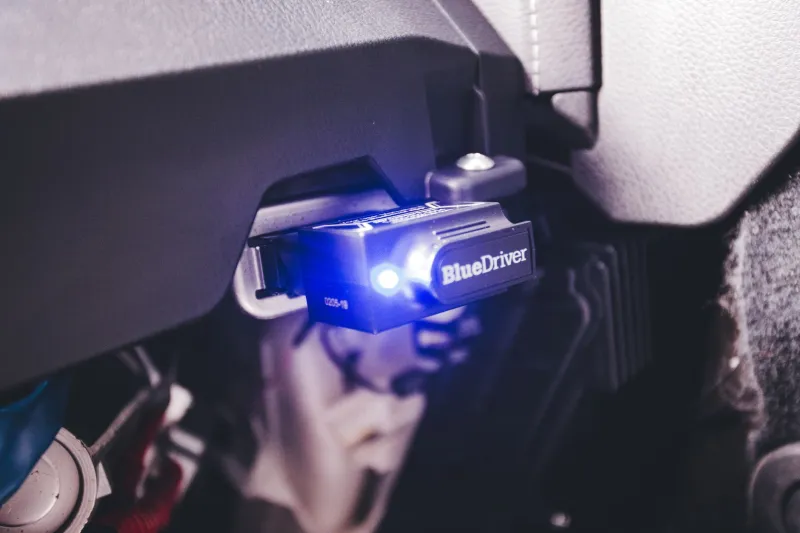
There's a war going on inside your engine bay, and most enthusiasts don't even know they're losing it. It's not fought with wrenches or dyno sheets — it's fought in lines of proprietary code, encrypted ECU firmware, and adaptive learning algorithms that treat your carefully planned modifications like a system error to be corrected. If you've been in the street build game for more than a decade, you already know something has shifted. The platforms that used to bend to your will are now pushing back hard.
Welcome to the age of the locked-down vehicle.
The OBD-II Era Wasn't Always the Enemy
Let's rewind a bit. When OBD-II became federally mandated in 1996, the enthusiast community actually benefited. Standardized diagnostic ports meant tuners could read data, flash ECUs, and build a whole cottage industry around performance software. Shops like HP Tuners and EFI Live became household names in garages across the country. The system was open enough to work with, and creative tuners found ways to extract serious power from platforms that manufacturers never intended to push.
That era is closing. Fast.
What changed isn't just complexity — it's intent. Automakers have become acutely aware that the tuning community exists, and in many cases, they've architected their modern systems specifically to resist modification. Whether that's driven by emissions compliance pressure, warranty liability, or outright corporate control is up for debate. The result, though, is the same: builders are hitting walls they didn't see coming.
The Adaptive Learning Problem Nobody Talks About
Here's where it gets genuinely frustrating for the modern street builder. Today's ECUs don't just run a fixed map — they learn. Continuously. Adaptive fuel trims, torque management tables, and cylinder-specific knock correction routines mean the computer is constantly rewriting its own operating parameters based on what it detects.
Put in a cold air intake, upgraded injectors, or a cam with more lift than stock, and the ECU will spend the next several drive cycles trying to compensate back toward whatever it considers "normal." In some cases, it succeeds well enough to partially neutralize your modification. In others, it throws a cascade of codes and triggers limp mode before you've even hit the on-ramp.
One builder in Phoenix we spoke with — running a late-model turbocharged four-cylinder platform from a major domestic brand — spent nearly four months chasing an intermittent boost cut that would only appear after the car had been driven for more than 45 minutes. Every time he cleared the codes and reset the adaptive tables, the car would run great for a week. Then the ECU would "learn" its way back into the problem. His tuner eventually traced it to a torque-limiting strategy embedded in the transmission controller that was communicating with the engine management system through a CAN bus network — and it was fighting the aftermarket tune on a loop.
That kind of multi-module interdependency is the new normal. And it's brutal.
Encryption, Licensing, and the Tuner's Nightmare
Beyond adaptive learning, there's a harder wall: encryption. A growing number of manufacturers — particularly those with European parent companies and increasingly some domestic brands — have moved to fully encrypted ECU firmware. Without the OEM's proprietary seed-and-key algorithm, third-party tuning software simply cannot write to the ECU. Period.
This isn't hypothetical. Builders working on certain late-model platforms have found that their preferred tuning software either can't connect at all or can read data but not write it. Some tuning companies have publicly acknowledged they're working on solutions that may take years to develop — if they're achievable at all without legal risk under the DMCA's anti-circumvention provisions.
That's right. The same federal copyright law that protects movies and music can technically be used to shield ECU firmware from the people who own the car. The automotive right-to-repair fight is real, and it's not just about getting your check engine light diagnosed at an independent shop. It cuts to the heart of whether you truly own the machine sitting in your driveway.
Real Builders, Real Brick Walls
Talk to tuners at any major shop working with 2020 and newer platforms and you'll hear variations of the same story. A shop owner in the Dallas area put it plainly: "Five years ago, we could take almost anything that rolled in and have a base tune running same day. Now we've got platforms where we're telling customers we literally cannot help them yet. Not won't — can't."
The pain points are spread across brands. Certain GM applications using the latest generation ECU architecture have given tuners fits with their revised security protocols. Ford's newer EcoBoost applications on specific trim levels have multi-layer protections that require workarounds some tuning companies are still developing. Import platforms — particularly late-model Hondas and Toyotas — have tightened the screws significantly compared to their predecessors, which were notoriously tuner-friendly.
The irony is thick. Some of the most popular enthusiast platforms of the last decade are precisely the ones being locked down hardest now, because their tuning ecosystems became too visible for manufacturers to ignore.
The Cat-and-Mouse Game Has New Rules
The tuning industry isn't rolling over. Companies are pouring serious resources into reverse engineering, and some have achieved breakthroughs on platforms that looked impenetrable six months prior. The community of independent researchers and open-source developers — think the spirit behind projects like MegaSquirt, but applied to modern OEM ECUs — continues to chip away at closed systems.
But the pace has changed. Where the old cat-and-mouse game played out over months, today it can stretch into years. And manufacturers update firmware through over-the-air patches — yes, your car can receive a software update overnight that changes what your tune is working against — meaning tuners are sometimes chasing a moving target.
For builders on newer platforms, the practical advice right now is sobering: do your research before you buy. The tuning support available for a 2018 model year vehicle and a 2023 version of the same nameplate can be dramatically different. Check forums. Talk to actual shops. Don't assume that because a platform has a strong tuning history, the newest iteration carries that forward.
Where Does This Leave the DIY Builder?
Honestly? In a complicated spot. The plug-and-play tune era for late-model vehicles is effectively over for a significant portion of the market. If you're building on an older platform — pre-2018 for many makes — you're largely still in good shape. The ecosystem is mature, solutions are well-documented, and the community knowledge base is deep.
But if you're eyeing a brand-new performance vehicle as a project car, you need to factor digital accessibility into your build planning the same way you factor in parts availability or platform reliability. A car that looks great on paper can become an expensive lesson if the ECU won't cooperate with your vision.
The street build scene has always evolved alongside the technology it works with. Builders adapted when fuel injection replaced carburetors. They figured out mass airflow sensors and knock retard. They'll adapt to this too — it's just going to take longer, cost more, and require a different kind of expertise than the wrench-and-dyno approach that built the culture.
The computers are getting smarter. The question is whether the community can keep up.