Beyond the LS: The Engine Swaps Quietly Dethroning America's Favorite V8
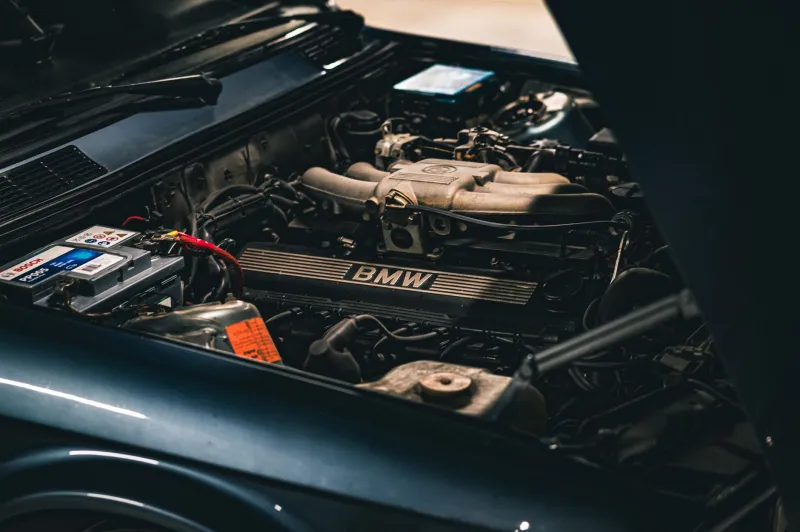
Ask any gearhead what engine goes in everything, and the answer has been the same for the better part of thirty years. The LS. It's cheap, it's plentiful, it makes big power without complaining, and the aftermarket support is essentially infinite. For a long time, questioning the LS in a street build was borderline sacrilege.
But something's shifting.
Walk the pits at any major street meet right now and you'll start noticing things that don't fit the usual script. A classic S-body Nissan with a turbocharged RB26 sitting where the KA used to live. A clean Mustang body with a Coyote 5.0 that's been built to within an inch of its life. A bagged Chevy truck running a modern boosted inline-six that sounds nothing like a V8 and honestly doesn't need to. The LS monoculture is cracking, and the builders doing it differently are making a real case for why the alternatives deserve a serious look.
Why the LS Dominated in the First Place
Before we talk about what's challenging it, it's worth understanding why the LS became the default answer. When GM started flooding the salvage yards with third and fourth-gen F-body Camaros and full-size trucks in the late 1990s and early 2000s, a lightweight, compact V8 with truck torque and sports car rev range suddenly became available for next to nothing. A junkyard LS1 could be had for under $500. Mounting kits, harness adapters, and standalone ECU solutions followed fast.
The result was a self-reinforcing ecosystem. More builders used it, so more support products got made, which made it even easier to use. By the 2010s, you could drop an LS into almost anything with a weekend, a credit card, and a YouTube tutorial. That kind of accessibility is hard to argue with.
But accessibility comes with a cost — and that cost is sameness.
The JDM Contingent Makes Its Case
Talk to builders who came up in the import scene and they'll tell you the LS worship always felt a little provincial. For them, the appeal was always in the engineering precision of Japanese powerplants — engines that rewarded you for understanding how they worked rather than just bolting on more cubes.
Daniel Reyes, a builder out of Southern California who runs a one-off AE86 build, went with a turbocharged 2JZ-GTE and hasn't looked back. "People always ask me why I didn't just go LS," he says. "And I get it. But the 2JZ has a character to it. The way it builds boost, the way it responds — there's a personality there that matters to me."
His build cost him roughly $8,500 all-in for the engine, supporting mods, and a standalone ECU — which is actually competitive with a well-sorted LS swap once you factor in headers, mounts, and tuning. The 2JZ's reputation for handling enormous boost on stock internals also means the ceiling is absurdly high. Builders regularly push past 700 wheel horsepower on a factory bottom end with the right fueling and tune.
The RB26DETT out of the Skyline GT-R is another JDM option that's been gaining traction stateside, especially as R32 and R33 imports have aged into legal territory in more states. The twin-turbo inline-six is revvy, sophisticated, and has a following that borders on religious. Parts availability has historically been the sticking point, but a growing number of US-based vendors have closed that gap considerably.
The Coyote and the American Alternative
Not every builder looking to escape the LS is reaching for a JDM solution. Ford's Coyote 5.0, introduced in the 2011 Mustang GT, has built a serious reputation as a high-revving, modern alternative that still plants the flag firmly in American V8 territory.
The Gen 3 Coyote, found in 2018 and newer Mustang GTs, makes 460 horsepower in stock form and responds extremely well to bolt-ons. More importantly, it's showing up in builds that have nothing to do with Mustangs. Fox-body swaps, classic truck restorations, even the occasional import project — the Coyote is proving it can play in spaces the LS used to own outright.
Cost-wise, a used Gen 2 Coyote from a wrecked Mustang runs anywhere from $2,500 to $4,500 depending on mileage and condition. It's not quite as cheap as a junkyard LS, but it's not outrageous either. The bigger hurdle is swap support — while it's improved dramatically, it still doesn't match the LS ecosystem in terms of sheer volume of available products.
"The Coyote sounds better, revs harder, and honestly feels more modern," says Marcus Tillman, a Texas-based builder who swapped one into a '69 Chevelle. "Yeah, people give me grief for it. But when it rips past 7,000 RPM and that exhaust note comes in, nobody's complaining anymore."
The Case for Going Forced Induction and Staying Small
There's another conversation happening in parallel — and it's the one that might be the most disruptive long-term. A segment of the street build community has stopped chasing displacement entirely and gone all-in on small-displacement forced induction.
Honda's K-series, particularly the K20 and K24, has been a darling of the track and time attack scene for years. But it's finding new fans in street builds where weight distribution and packaging matter as much as peak power. A built K24 with a quality turbo kit can push 500-plus wheel horsepower while fitting into spaces a V8 can't touch. The chassis balance you get in a lighter, smaller-displacement build is something no amount of LS torque can fully compensate for.
Even more radical is the growing interest in Nissan's SR20DET and Mitsubishi's 4G63 — engines with deep aftermarket roots in the drift and time attack worlds that are now showing up in builds you wouldn't expect. These aren't budget moves; a properly built SR20 or 4G63 swap with supporting mods can run $10,000 to $15,000 before you tune it. But the builders doing it aren't chasing economy — they're chasing a specific kind of performance that a big V8 simply can't deliver.
So Is the LS Era Actually Over?
Not even close. The LS is going to be in builds for the next fifty years. The parts availability, the price point, and the sheer simplicity of the platform mean it will always be the path of least resistance for a builder who wants reliable power without a PhD in engine management.
But the monopoly on street build culture? That part is definitely cracking. Builders are more educated, more connected, and more willing to chase the build that's right for their specific car and vision rather than defaulting to what everyone else is doing. The JDM contingent is louder than ever. The Coyote crowd is getting organized. And the small-displacement turbo builders are quietly putting down numbers that would have seemed impossible a decade ago.
The swap game is bigger than one engine now. And honestly, that's better for everyone.