Don't Blow Your Budget on Bolt-Ons: The First Mod Trap Every New Enthusiast Falls Into
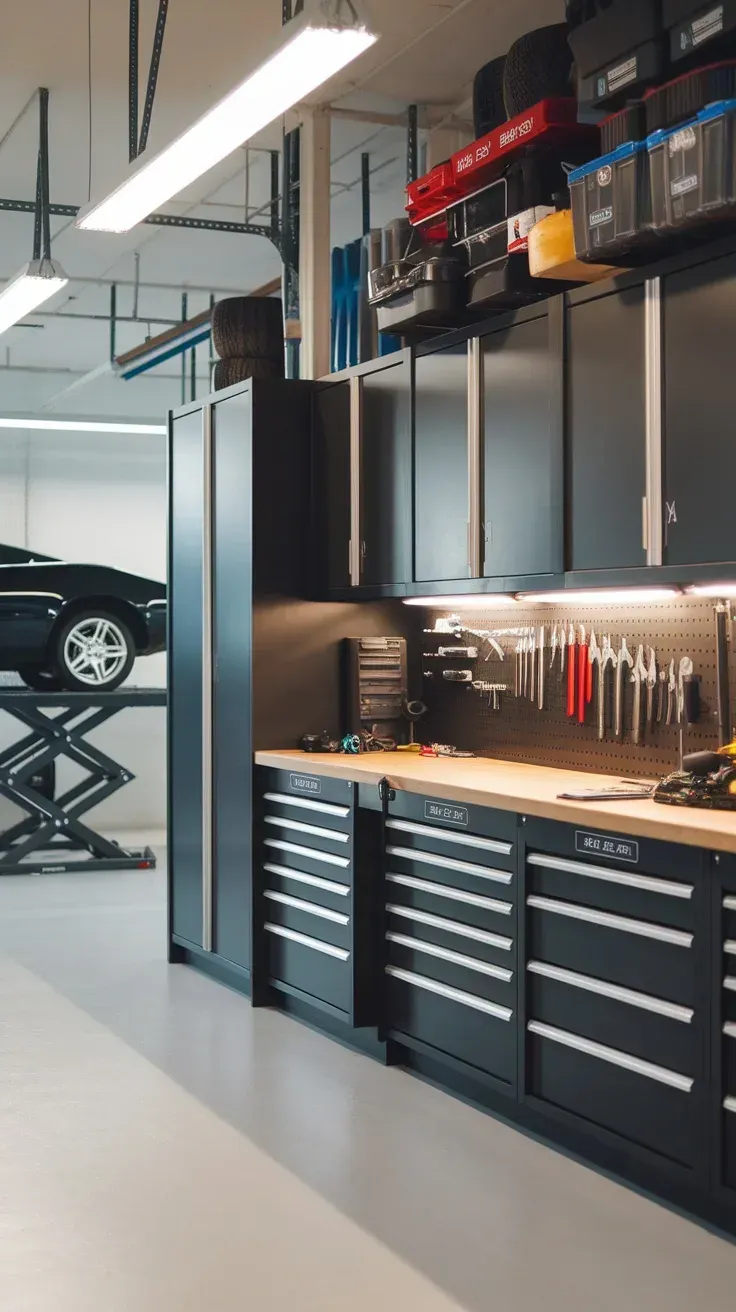
Photo: car enthusiast garage first modification intake exhaust parts tools, via garageutopiacom9f54d.zapwp.com
You just picked up your first real project car. Maybe it's a lightly used WRX, a bone-stock Mustang GT, or a clean EG Civic you found on Facebook Marketplace. You're fired up, you've got a few hundred bucks burning a hole in your pocket, and every YouTube video is pointing you toward the same five parts. So you pull the trigger.
Then, six months later, you're staring at a car that sounds a little louder, maybe pulls slightly harder above 4,000 RPM, and still feels completely uninspiring everywhere else. Worse, some of those "performance" parts actually made things worse — a rough idle here, a check engine light there, maybe even a tune that now costs more than the parts themselves.
Welcome to the first mod trap. It happens to almost everyone, and it's not your fault. But it is avoidable.
Why the "Easy Wins" Aren't Winning
The most popular entry-level mods — cold air intakes, axle-back exhausts, drop-in air filters, and short-throw shifters — are marketed brilliantly. They're affordable, they're easy to install, and they make your car look or sound more aggressive. That's real. But the performance gains? Usually paper-thin.
Take the cold air intake. On a naturally aspirated four-cylinder, you're realistically looking at somewhere between 3–8 horsepower at peak. Sounds decent until you factor in that the stock airbox on most modern cars is already pretty well-engineered. Manufacturers spend millions optimizing intake routing, heat shielding, and resonance. A $250 aftermarket tube and cone filter often trades low-end torque for a slight top-end bump — and on a street car you drive in traffic every day, that's not a great deal.
Axle-back exhausts are even trickier. They change the sound, full stop. They rarely change the flow enough to matter because the restriction is almost always further upstream — at the headers or catalytic converters. You've just paid $400–$800 to make noise, and you've left the actual bottleneck completely untouched.
The Real Cost Nobody Talks About
Here's where the $500 mistake gets expensive: compatibility debt.
When you stack bolt-ons without a plan, you create a build that's harder and more expensive to evolve. Say you buy a catback, then a cold air intake, then eventually decide to go forced induction. Suddenly half those parts are incompatible with your new setup. You're not upgrading — you're replacing parts you already paid for.
Community members in build threads across forums like NASIOC, S197 Mustang Forum, and Honda-Tech have documented this pattern repeatedly. One builder running a turbocharged K-series Honda said he spent nearly $1,400 on bolt-ons in his first year that he eventually pulled off the car entirely when he went forced induction. "I basically paid to learn," he wrote. "Would've been better off banking that money toward the turbo kit from day one."
That's the real sting — not just wasted money, but wasted time and the demoralizing feeling of going backward.
What Actually Moves the Needle
So what should you spend that first $500 on? The answer depends on your car, but the principle is universal: invest in the foundation, not the decoration.
Tires First, Always
If your car is running all-seasons or worn-down rubber, nothing else you buy matters as much as a set of quality performance tires. A set of Michelin Pilot Sport 4S or Continental ExtremeContact Sport tires will transform how your car feels, stops, and handles in ways that no intake or exhaust ever will. Grip is the ultimate performance modifier. It's not glamorous, but enthusiasts who've made the switch will tell you it's the single biggest bang-for-buck upgrade available.
Suspension Geometry Over Lowering Springs
A lot of new builders want to go low immediately. That's understandable — stance matters in street culture. But a cheap set of lowering springs on stock struts is a recipe for a rough ride, premature wear, and handling that's actually worse than stock. If you're going to spend money on suspension, put it toward a proper coilover setup from a reputable brand like KW, Fortune Auto, or BC Racing. You'll spend more upfront, but you'll have adjustability and quality that grows with your build.
Brake Pads and Fluid
This one gets overlooked constantly. Upgraded brake pads — something like Hawk HPS street pads — combined with fresh brake fluid (DOT 4 or better) will improve your stopping confidence dramatically. It's a safety upgrade that doubles as a performance upgrade, and it's well within that $400–$600 budget range.
A Proper Tune (If Applicable)
If your car has an ECU that's tune-friendly — think Subarus, EVO platforms, late-model Mustangs, or anything with an accessible flash point — a professional tune from a reputable shop can extract real gains from your existing hardware. An E-tune or dyno session might run $300–$600, but it optimizes what you already have rather than adding parts that need to be reoptimized later.
Build With the End in Mind
The smartest enthusiasts in any community approach their builds backward. They decide where they want to end up first — track-focused, daily driver with attitude, full-send drag car — and then they map out every dollar spent as a step toward that goal.
That intake might feel like progress. But if it's not part of a larger plan, it's just noise. Literally.
Before you buy anything, ask yourself two questions: Does this part survive my next upgrade? And does it make the car better in a way I'll actually feel every time I drive it?
If the answer to both is yes, pull the trigger. If not, let the money sit until you're ready to spend it on something that compounds — something that makes every future dollar you spend more effective.
Your build deserves a strategy, not just a shopping cart.